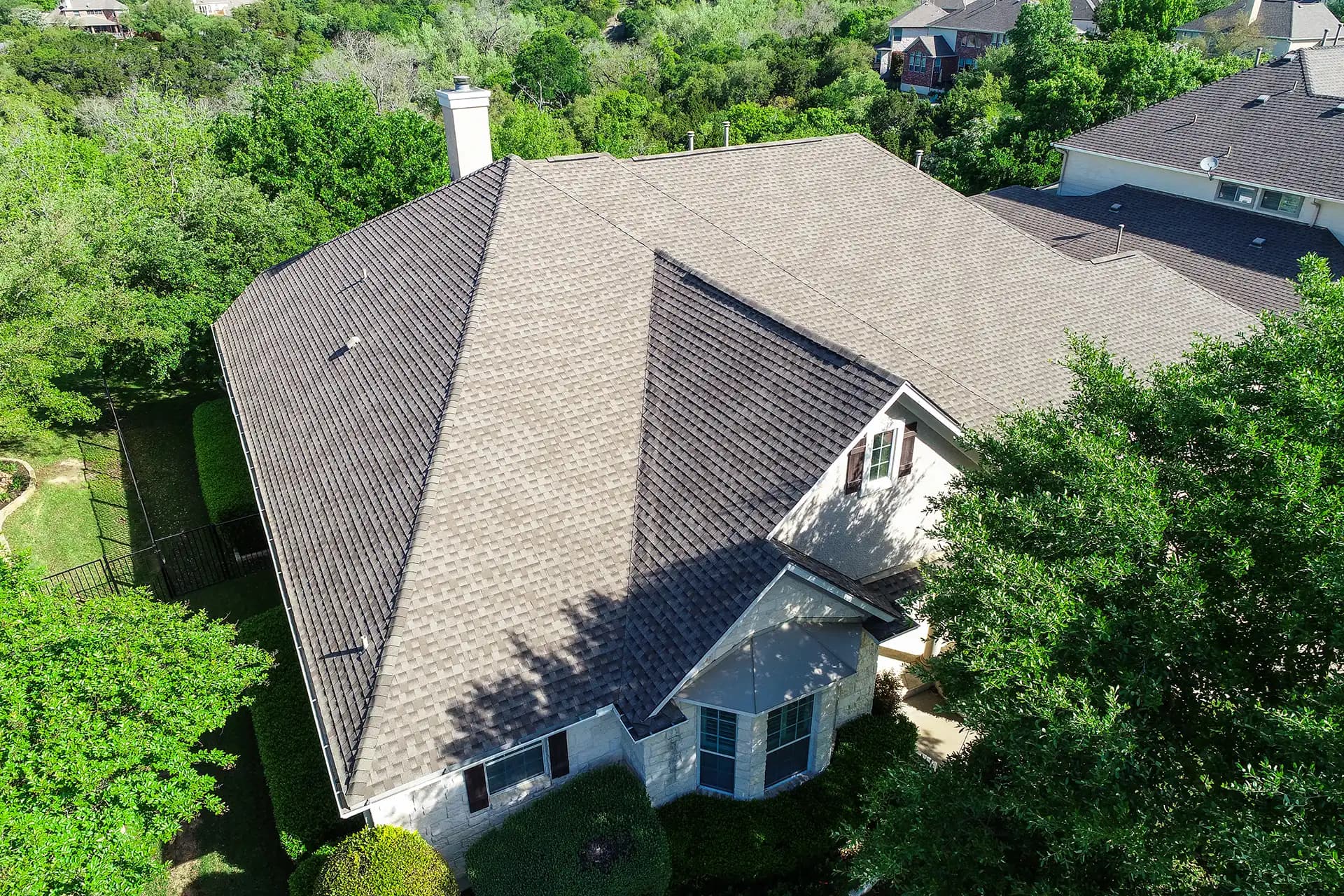
Short answer: After hail, check from the ground for missing shingles, granules near downspouts, dented gutters, damaged vents, and new ceiling stains. Do not climb on the roof after a storm. Document what you can safely see, then schedule a professional inspection before deciding between repair and replacement.
A Texas hail damage roof guide explaining what hail can do to shingles, gutters, vents, flashing, and decking, plus how homeowners should document damage before approving repair or replacement.
Why Hail Damage Is Easy To Miss
Hail damage is not always a dramatic hole in the roof. On asphalt shingles, it can show up as bruising, granule loss, fractured mats, loosened seal strips, or damaged ridge caps. Those issues may not leak immediately, but they can shorten roof life and make the next wind-driven storm more risky.
Texas roofs also age under heat and UV exposure, so a good inspection separates storm impact from normal wear. That distinction matters when comparing repair scope, replacement timing, and documentation.
Safe Ground-Level Signs
Homeowners can gather useful information without stepping on the roof. The goal is not to diagnose every shingle. The goal is to identify whether the roof needs a documented inspection.
- Granules collecting in gutters, splash blocks, or near downspouts.
- Dents on gutters, downspouts, roof vents, flashing, window screens, or garage doors.
- Missing, lifted, or visibly torn shingles.
- Damaged ridge caps or exposed dark roof areas.
- New water stains, attic moisture, or musty smells after the storm.
How Hail Affects Different Roof Materials
The repair strategy depends on the roof material. Architectural shingles, impact-rated shingles, metal panels, tile, and flat-roof membranes show hail damage differently.
| Roof Material | Possible Hail Signs | Inspection Focus |
|---|---|---|
| Architectural shingles | Bruising, granule loss, mat fractures, loosened seals | Check slopes, ridge caps, valleys, flashing, and soft metals. |
| Impact-rated shingles | Reduced but still possible impact damage | Review manufacturer rating, impact pattern, and surrounding accessories. |
| Metal roofing | Dents, coating damage, fastener or seam concerns | Inspect seams, penetrations, coatings, and drainage paths. |
| Flat or low-slope roofs | Membrane bruising, punctures, damaged coatings, clogged drains | Review seams, drains, curbs, ponding, and rooftop equipment areas. |
Documentation Before Decisions
Take photos of visible damage, note the storm date, save weather alerts if available, and keep any inspection report together with repair estimates. A contractor can document roof conditions and construction scope, while coverage decisions remain between the homeowner and insurer.
Avoid signing a rushed contract before the roof has been inspected and the scope is clear. A useful estimate should explain whether the roof is a repair candidate or whether the damage is widespread enough to compare replacement.
Repair Or Replacement After Hail
Repair may be enough when damage is isolated and the rest of the roof is serviceable. Replacement becomes more practical when several slopes are affected, shingles are brittle, ridge caps are damaged, decking is soft, or prior repairs have already failed.
For a broader decision framework, compare roof repair versus replacement, roof inspection, and roof replacement before approving work.
Frequently Asked Questions
Can hail damage a roof without causing an immediate leak?
Yes. Hail can weaken shingles, loosen granules, damage ridge caps, or bruise the roof surface before water enters the home.
Should I climb on my roof after a hailstorm?
No. Storm-damaged roofs can be slippery or unstable. Check from the ground, photograph visible damage, and schedule a professional inspection.
Does every hail-damaged roof need replacement?
No. Some damage can be repaired. Replacement is more likely when damage is widespread, materials are brittle, or several roof components are affected.
Next Step
Schedule a documented roof inspection or review storm-related options through roof repair and roof replacement.