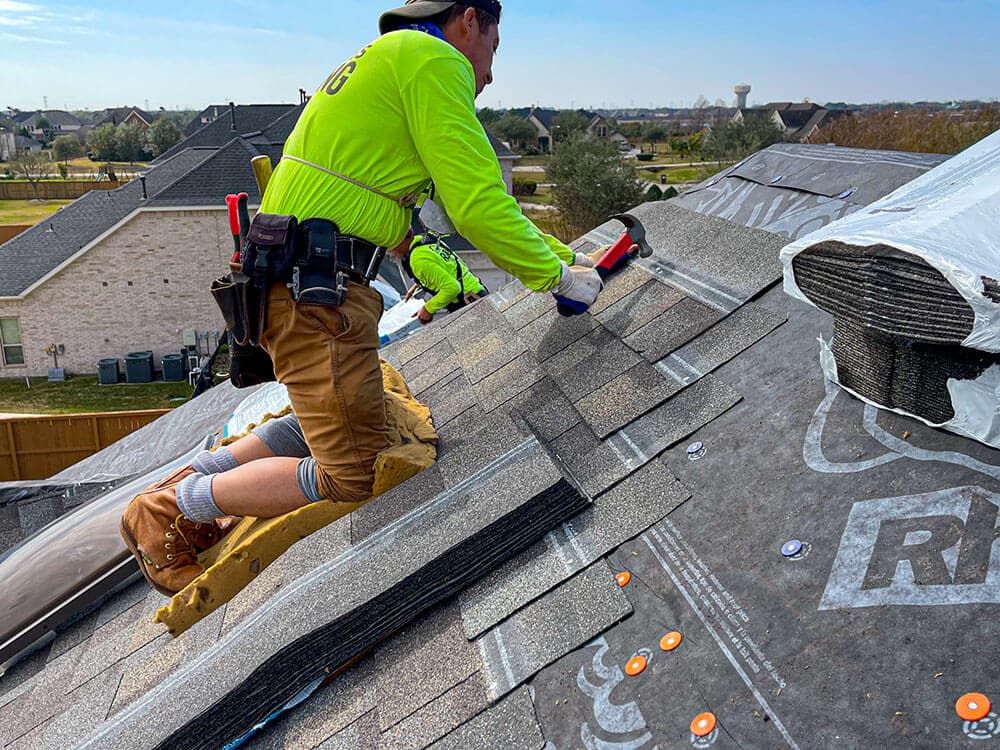
Short answer: Repair is usually better when damage is isolated, the roof is still serviceable, and materials can be matched. Replacement is usually smarter when damage is widespread, leaks repeat, shingles are brittle, decking is soft, or the roof is near the end of its useful life.
A Texas homeowner guide to deciding between roof repair and roof replacement, including roof age, storm damage, leaks, decking condition, warranties, and estimate comparison.
The Decision Is Not Based On Age Alone
Roof age matters, but it should not be the only factor. A younger roof with poor flashing or storm damage may need serious work, while an older roof with one isolated pipe boot leak may only need a targeted repair.
The better question is whether the roof system can keep protecting the home after repair. That means looking at shingles, underlayment, decking, flashing, ventilation, drainage, roof penetrations, and the pattern of past leaks.
When Roof Repair Usually Makes Sense
A repair is most reasonable when the problem is specific and the rest of the roof still has useful life. The repair should address the cause, not just the visible stain inside the home.
- One cracked pipe boot or small flashing gap is causing the leak.
- A small number of shingles are missing or damaged, and matching materials are available.
- The roof is relatively young and does not show widespread granule loss, brittleness, or lifted edges.
- Decking is solid and there are no repeated leak paths.
- The repair can be documented with photos and a clear workmanship explanation.
When Replacement Is The Better Long-Term Move
Replacement becomes more practical when repairs are likely to become a cycle. If the roof has widespread storm damage, brittle shingles, repeated leaks, soft decking, poor ventilation, or multiple failing penetrations, a patch may only delay the same problem.
A full replacement also gives the homeowner a chance to correct roof system details that repairs often cannot solve, including ventilation, underlayment, drip edge, starter strips, ridge cap, valley treatment, and flashing.
- Multiple leaks are appearing in different areas.
- Hail or wind damage affects several slopes, ridge caps, vents, or soft metals.
- Shingles are brittle, curling, shedding granules heavily, or no longer sealing well.
- Decking is soft, stained, delaminated, or damaged by long-term moisture.
- Repair costs are large enough that they should be compared against replacement value.
Repair And Replacement Comparison
A good contractor should be able to explain both options when both are realistic. If only one option is presented, ask why the other option was ruled out.
| Factor | Repair Leaning | Replacement Leaning |
|---|---|---|
| Damage pattern | One isolated leak source | Multiple slopes, repeated leaks, or widespread storm impact |
| Roof age | Roof still has meaningful service life | Roof is near the end of service life or has aged unevenly |
| Decking | Decking is dry and solid | Soft, stained, rotten, or delaminated decking is present |
| Material match | Replacement shingles can blend reasonably | Old materials are discontinued or patching will create weak transitions |
| Warranty | Small workmanship warranty on targeted work | New roof system warranty and documented installation scope |
How To Compare The Estimates
Compare scope before comparing price. A cheap repair that ignores flashing, attic moisture, or roof system age may cost more after the next storm. A replacement estimate that does not explain decking policy, ventilation, flashing, cleanup, and warranty is also incomplete.
- Ask for inspection photos showing the problem area and surrounding roof condition.
- Confirm whether the estimate includes flashing, pipe boots, ridge cap, underlayment, and ventilation where relevant.
- Ask how hidden decking damage will be priced if discovered during tear-off.
- Compare roof repair, roof replacement, and roof inspection service details before approving work.
- Use market pages for local context: Houston, Dallas-Fort Worth, and Austin and San Antonio.
Frequently Asked Questions
Is roof repair always cheaper than replacement?
Repair usually costs less upfront, but it is not always the better value. If damage is widespread or the roof is near the end of its useful life, replacement may reduce repeat costs and leak risk.
How do I know if my roof has enough life left to repair?
A documented inspection should look at shingles, flashing, decking, attic moisture, ventilation, drainage, and the number of problem areas. Age alone is not enough.
Can I repair one section and replace the rest later?
Sometimes. Section repair can work when damage is isolated and tie-ins are clean. It is less practical when materials do not match, surrounding shingles are brittle, or roof planes share failing details.
Next Step
Start with a documented roof inspection, then compare the right scope through roof repair or roof replacement.