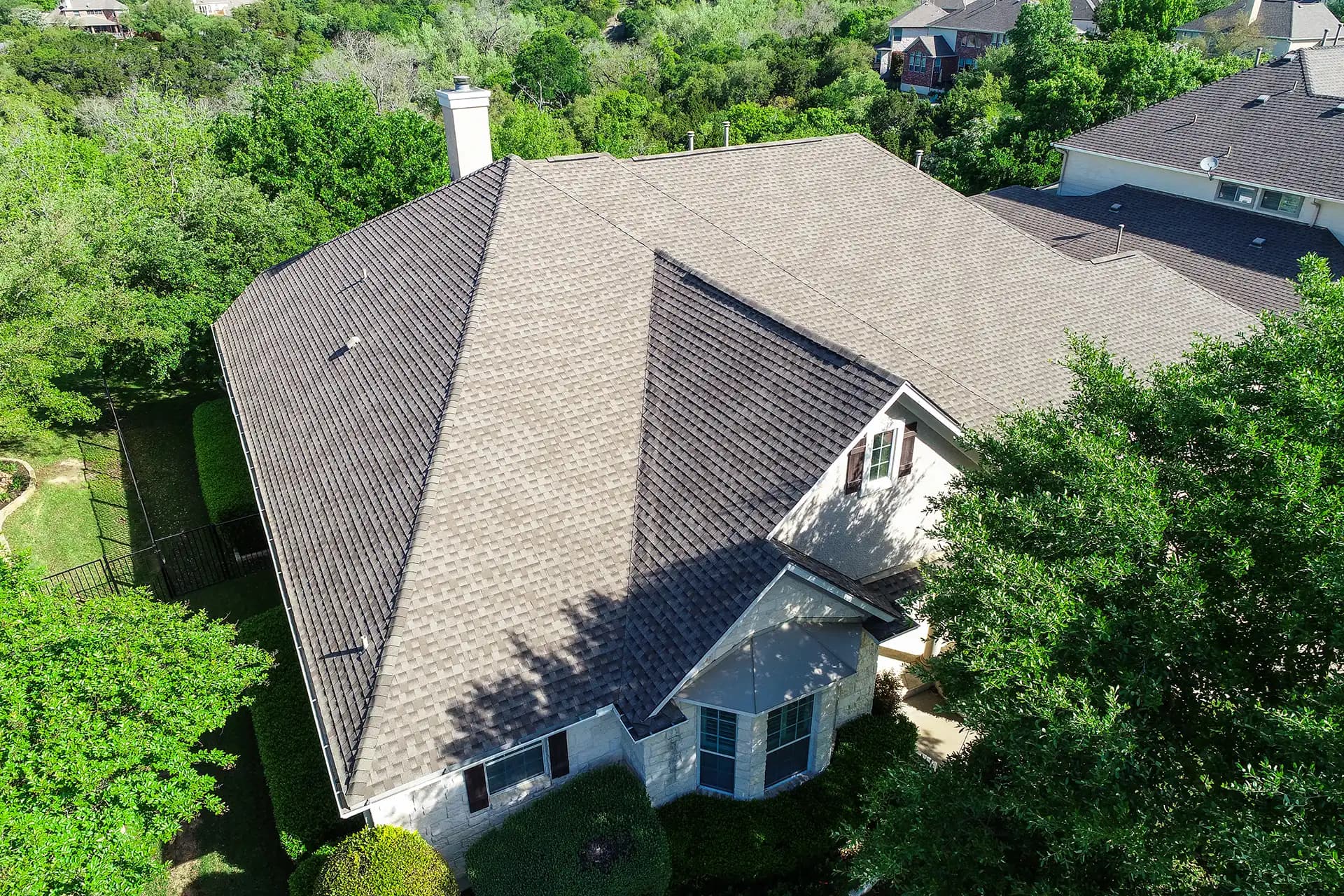
Short answer: After a Texas storm, inspect from the ground first, photograph visible damage, check attic and ceilings, avoid signing rushed contracts, and schedule a professional roof inspection before permanent repairs.
A homeowner guide to storm damage roof inspections in Texas, including hail signs, wind damage, documentation, emergency mitigation, and how to avoid rushed post-storm decisions.
What To Check From The Ground
Texas hail and wind damage is not always obvious from the driveway. Still, a ground-level check can identify urgent warning signs without putting anyone on a wet or unstable roof.
- Missing, creased, or lifted shingles.
- Granules collecting near downspouts.
- Dented gutters, vents, soft metals, or garage doors.
- Tree limbs, debris impact, or damaged ridge caps.
- Ceiling stains, attic moisture, or new musty smells.
Hail Damage Versus Normal Wear
Hail can bruise shingles, knock off granules, expose asphalt, and damage vents or flashing. Normal aging usually appears as uniform granule loss, curling, cracking, or brittleness over time.
A useful inspection separates storm-created damage from age-related wear because the repair path and insurance conversation can be different.
| Condition | Often Looks Like | Next Step |
|---|---|---|
| Hail impact | Random dark marks, bruising, dented soft metals | Document and inspect roof field, slopes, vents, and gutters. |
| Wind damage | Lifted, creased, torn, or missing shingles | Check sealed edges, fastener lines, and exposed underlayment. |
| Age-related wear | Uniform granule loss, curling, cracking | Compare repair cost against remaining service life. |
Documentation That Helps
Good documentation is simple: photos, dates, weather event notes, and written contractor findings. Do not throw away damaged materials before you document them when safe to do so.
Contractors should not promise claim approval. They can document roof conditions, provide repair estimates, and explain construction scope, while the insurer handles coverage decisions.
Avoid Post-Storm Pressure
After major hail events, neighborhoods often see an influx of door-to-door contractors. Some are legitimate, and some are not. Slow the process down enough to verify business identity, public profiles, written scope, warranty terms, and insurance wording.
- Do not sign blank authorization forms.
- Do not rely only on verbal warranty promises.
- Ask who will supervise the project and who handles cleanup.
- Check public profiles such as Google, manufacturer profiles, Angi, GuildQuality, and HomeAdvisor.
Frequently Asked Questions
How soon should I inspect my roof after hail?
As soon as conditions are safe. Start with ground and attic observations, then schedule a professional inspection before small openings become leaks.
Can hail damage exist without a leak?
Yes. Hail can weaken shingles before water enters the home. Waiting for a leak can allow damage to spread into decking, insulation, and drywall.
Should a contractor meet my adjuster?
A contractor can be present to explain observed roof conditions and construction scope, but coverage decisions belong to the insurer.
Next Step
Start with a documented roof inspection or review local service details for Houston, Dallas-Fort Worth, and Central Texas.