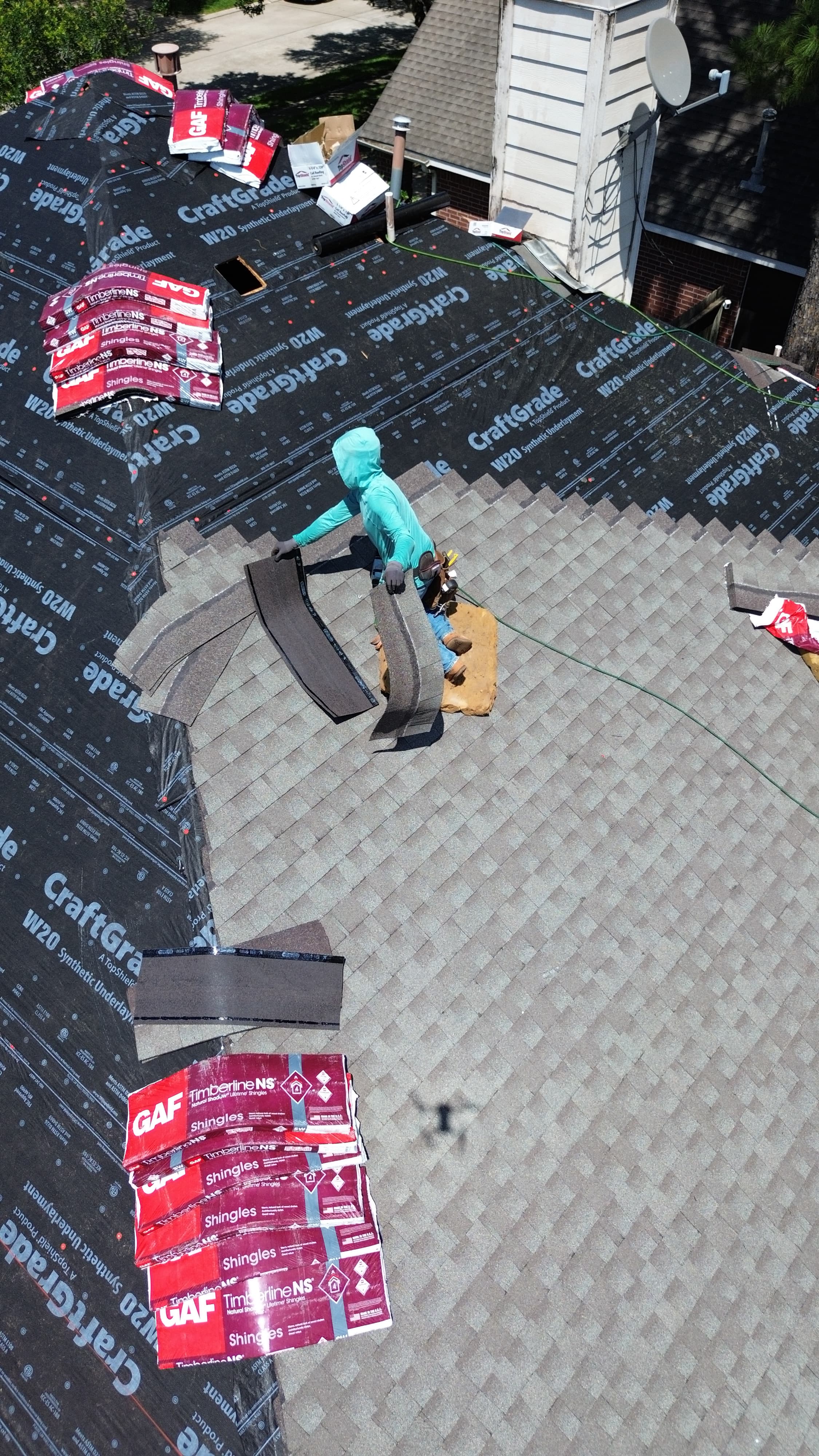
Short answer: The homeowner reports the claim, the insurer decides coverage, the adjuster evaluates covered damage, and the contractor documents roof conditions, explains repair scope, and provides pricing for construction work.
A clear Texas roof insurance claim guide explaining what homeowners, contractors, and insurance adjusters each do after hail, wind, leaks, or storm damage.
Know The Roles Before The Claim Starts
Roof insurance conversations get confusing when everyone uses the same words differently. The contractor is not the insurance company. The adjuster is not the installer. The homeowner owns the policy relationship.
| Person | Role | Limit |
|---|---|---|
| Homeowner | Reports the claim, provides policy information, chooses the contractor | Should not sign unclear construction documents. |
| Insurance adjuster | Evaluates covered damage under the policy | Does not install the roof. |
| Roofing contractor | Documents roof condition, provides repair or replacement scope, performs approved work | Should not promise claim approval. |
What To Do After Hail Or Wind
Start with safety and documentation. If the roof is leaking, temporary mitigation may be necessary before the claim is fully resolved.
- Photograph interior and exterior damage where safely visible.
- Record the storm date and neighborhood impact.
- Schedule a roof inspection with photo documentation.
- Review your deductible and policy responsibilities.
- Keep invoices, reports, photos, and communication in one folder.
What A Contractor Can Provide
A contractor can explain roof system damage, identify construction code or manufacturer installation concerns, provide a repair estimate, and complete the work. A contractor should be careful not to act as a public adjuster unless properly licensed for that role.
The most useful contractor report is factual: photos, locations, quantities, materials, and the construction reason for each recommended repair.
Avoid Claim Mistakes
Do not delay urgent mitigation. Do not throw away documentation. Do not sign a blank authorization. Do not assume every stain is covered storm damage. Do not choose a contractor only because they say the claim will be easy.
Field note: Ruff Roofing can inspect and document roof conditions, but the insurance carrier makes policy coverage decisions.
Frequently Asked Questions
Should I get a roof inspection before filing a claim?
A documented inspection can help you understand whether roof damage exists before you decide how to proceed with your insurer.
Can a roofer waive my deductible?
Be cautious. Deductible rules are legal and policy-sensitive. Ask your insurer and follow Texas law and your policy terms.
What if the adjuster and contractor disagree?
Ask for clear documentation from both sides. The insurer controls coverage decisions, while the contractor should explain construction scope and pricing.
Next Step
Begin with a documented roof inspection, or request storm-damage support through Ruff Roofing contact.