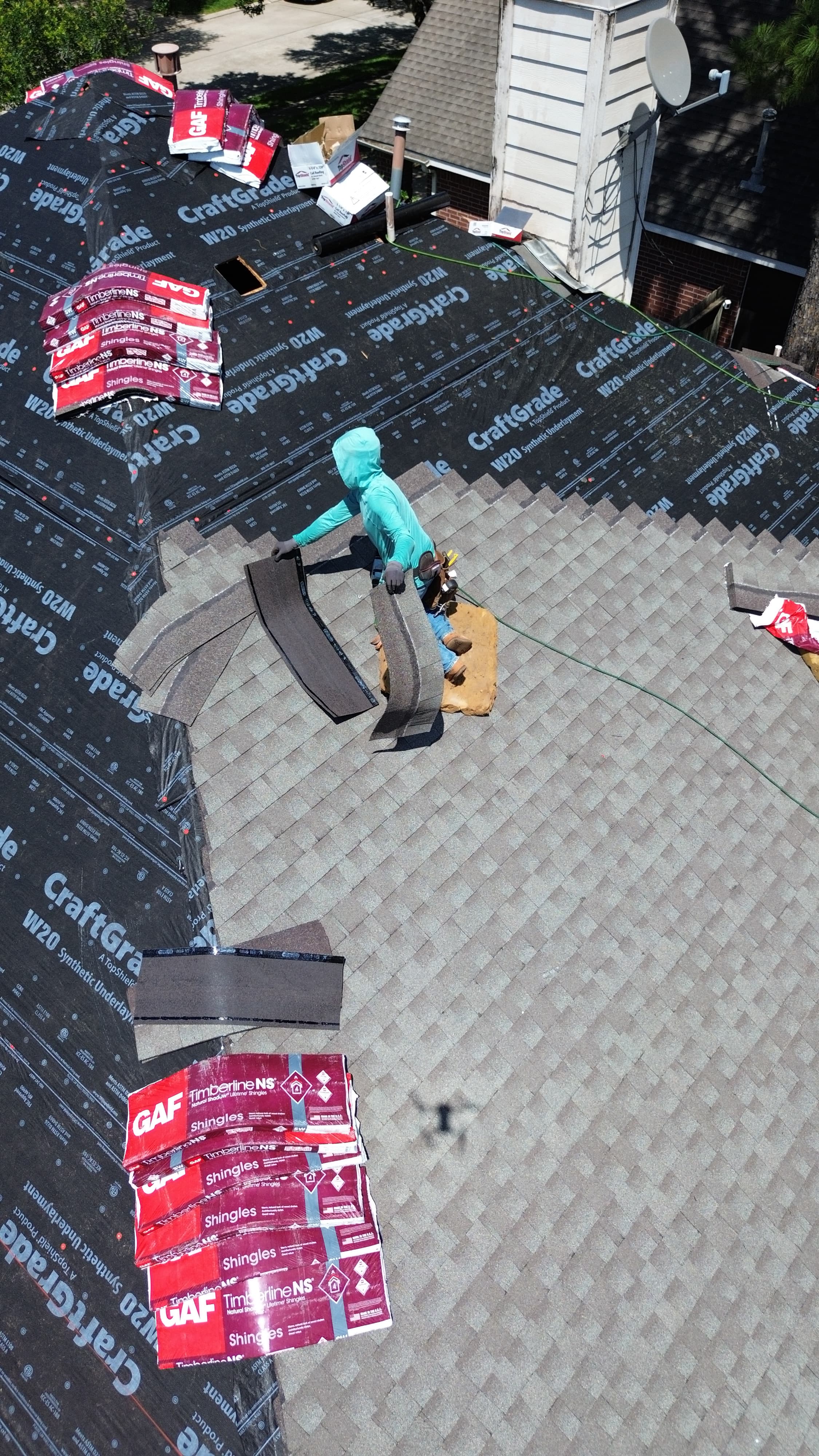
Short answer: Before hurricane season, Houston homeowners should inspect roof edges, flashing, pipe boots, gutters, trees, attic moisture, and loose shingles. Complete small repairs before a named storm is close, and keep updated photos of the roof and interior ceilings for documentation.
A Houston hurricane season roof preparation checklist covering inspections, gutters, trees, flashing, attic leaks, emergency photos, and when to handle repairs before Gulf Coast storms arrive.
Start Before A Storm Is In The Forecast
The worst time to discover a roof issue is when supplies are limited, crews are booked, and weather is already moving into the Gulf. A preseason roof check gives homeowners time to address small issues before wind-driven rain tests every weak point.
Houston roofs deal with heat, humidity, sudden downpours, tropical systems, and debris from mature trees. Preparation should focus on drainage, attachment, penetrations, and known leak paths.
Exterior Checklist
Most homeowners can review several items from the ground or a safe window view. Anything requiring roof access should be left to a qualified contractor.
- Look for missing, lifted, cracked, or curled shingles.
- Check roof edges, ridge caps, valleys, and areas around chimneys or walls.
- Clear gutters and downspouts so heavy rain can leave the roof quickly.
- Trim branches that can scrape shingles or break during wind.
- Confirm satellite mounts, vents, and other roof penetrations are secure.
- Photograph the roof, gutters, fence line, and any existing exterior damage before storm season.
Interior And Attic Checklist
Interior signs often reveal weak roof details before the next storm makes them obvious. Attic stains, rusty nails, damp insulation, or repeated ceiling marks should be checked before hurricane season.
- Look for water stains around ceilings, skylights, bath fans, and exterior walls.
- Check the attic after rain for moisture trails, dark decking, or damp insulation.
- Make sure attic ventilation is not blocked by stored items or insulation.
- Save photos of ceilings and attic conditions so new damage can be compared later.
What To Repair Before Hurricane Season
Small roof problems can become expensive during wind-driven rain. Prioritize repairs that stop water entry, improve drainage, or secure vulnerable roof components.
| Issue | Why It Matters | Service To Review |
|---|---|---|
| Cracked pipe boot | A common leak source during heavy rain | Roof repair |
| Loose or missing shingles | Wind can open the roof system further | Shingle roofing |
| Clogged gutters | Backed-up water can stress fascia, soffits, and roof edges | Home exteriors |
| Old storm damage | Prior hail or wind damage can worsen under tropical weather | Roof inspection |
After A Storm Passes
Wait until conditions are safe, then document from the ground. Take photos of missing shingles, debris impact, dented gutters, leaks, and ceiling stains. Do not climb onto a wet roof or move damaged materials before documenting them when safe.
If water is entering the home, protect the interior first and request emergency stabilization. Permanent repair should follow a documented inspection once the roof can be safely accessed.
Field note: For Houston properties, start with the Houston roofing page or the Texas roof leak repair guide if water is already inside.
Frequently Asked Questions
When should Houston homeowners inspect the roof before hurricane season?
Ideally before peak storm activity, while weather is calm and repairs can be scheduled without emergency pressure.
Can clogged gutters cause roof leaks during heavy rain?
They can contribute to water backup, fascia damage, soffit issues, and roof-edge problems. Drainage should be part of storm preparation.
What should I do first if the roof leaks during a storm?
Protect the interior, keep people away from electrical hazards, document the leak, and avoid climbing on the roof until conditions are safe.
Next Step
Prepare before the next storm by scheduling a roof inspection or requesting help through Ruff Roofing contact.