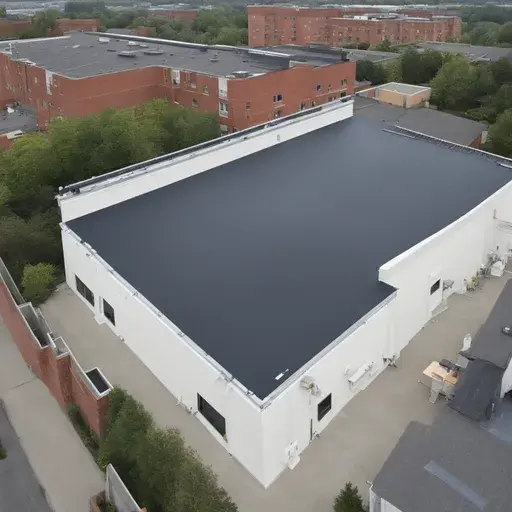
Short answer: Commercial flat roofs in Texas should be inspected at least twice a year and after major storms. The highest-risk areas are drains, seams, penetrations, flashing, ponding water, rooftop equipment, and previous repair zones.
A commercial flat roof maintenance guide for Texas property managers, covering inspection frequency, drainage, seams, penetrations, storm checks, documentation, and when to repair or replace.
Why Flat Roof Maintenance Matters
Flat and low-slope roofs fail quietly. A small seam opening or clogged drain can move water into insulation long before tenants see a ceiling stain. By the time water appears inside, the repair may involve membrane, insulation, decking, and interior work.
A maintenance program creates documentation, reduces surprise capital expenses, and helps property managers make better repair-versus-replacement decisions.
Maintenance Schedule For Texas Buildings
Texas weather makes annual inspection too thin for many commercial buildings. Heat, UV, hail, wind, rooftop HVAC traffic, and sudden downpours all accelerate wear.
| Timing | What To Check | Why |
|---|---|---|
| Spring | Storm damage, seams, drains, debris, flashing | Prepares the roof before heavy rain and hurricane season. |
| Fall | UV wear, ponding areas, previous repairs, equipment curbs | Catches summer heat damage before winter fronts. |
| After major storms | Hail marks, punctures, uplift, loose metal, clogged drains | Documents event-related damage while evidence is fresh. |
High-Risk Areas On TPO, EPDM, And Modified Bitumen
Each membrane has its own failure patterns, but most commercial leaks begin around details: drains, scuppers, seams, penetrations, parapet walls, mechanical curbs, and edges.
- TPO: check heat-welded seams, punctures, edge details, and rooftop traffic paths.
- EPDM: check seams, shrinkage, adhesive failure, and punctures around service equipment.
- Modified bitumen: check laps, blisters, cracks, granule loss, and ponding zones.
- All systems: keep drains clear and document water that remains 48 hours after rain.
Repair Or Replacement For A Commercial Roof
A repair is practical when damage is localized and the membrane still has useful life. Replacement or recover options should be discussed when leaks are recurring, insulation is saturated, seams are failing widely, or repair spend is becoming a recurring operating expense.
Related pages: commercial roofing and flat roofing.
Frequently Asked Questions
How often should a commercial flat roof be inspected?
At least twice a year and after significant hail, wind, or heavy rain events. Buildings with heavy rooftop equipment traffic may need more frequent checks.
Is ponding water always a roof failure?
Not always, but water that remains for long periods can accelerate membrane wear, add load, and expose drainage issues that should be corrected.
What records should property managers keep?
Keep dated inspection reports, photos, repair invoices, warranty documents, storm-event notes, and a map of recurring leak areas.
Next Step
Property managers can start with commercial roofing service or request an inspection through Ruff Roofing contact.